Losing a tooth doesn’t always feel urgent. At first, you simply avoid chewing on that side or learn to live with the gap. Over time, though, everyday habits begin to change. Eating certain foods becomes less comfortable, neighbouring teeth may start to shift, and what seemed like a small issue can affect your overall oral health.
That’s often when people begin looking for a Dental Implant Clinic Near Patipukur. Dental implants are one of the options dentists may recommend to replace missing teeth, but the treatment involves much more than placing an artificial tooth. It starts with careful planning, a thorough examination and choosing a clinic that focuses on what’s right for your individual needs.
A Missing Tooth Changes More Than Your Smile
Most people notice a missing tooth because they can see the gap. Dentists notice something else as well.
They look at how the rest of your mouth is adapting. A missing tooth can gradually affect the way your teeth work together, even if it isn’t causing pain.
Some of the changes that may happen include:
- Chewing more on one side, which places extra pressure on certain teeth.
- Neighbouring teeth drifting into the empty space over time.
- Changes in the jawbone, as the area no longer supports a natural tooth.
- Small changes in speech, depending on which tooth has been lost.
These changes don’t happen overnight, and they don’t affect everyone in the same way. That’s why dentists usually recommend having a missing tooth assessed rather than assuming it isn’t causing any problems.
Why Dental Implants Feel Different From Other Tooth Replacement Options
There are several ways to replace a missing tooth, and the right choice depends on your dental condition, lifestyle and long-term needs.
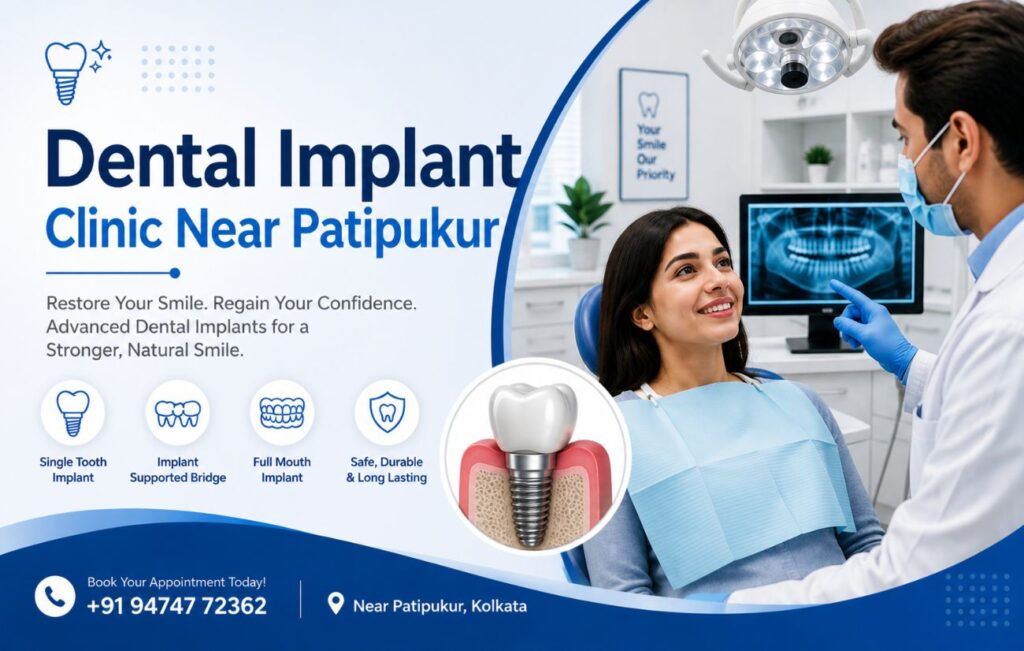
A dental implant is designed to replace both the root and the visible part of a missing tooth. A small titanium implant is placed in the jawbone, where it acts as an artificial root. Once healing has taken place, a custom-made dental crown is attached to complete the restoration.
Compared with removable dentures, implants stay securely in place and don’t need to be taken out for cleaning. Unlike a traditional bridge, they generally don’t rely on neighbouring teeth for support.
Many patients consider implants because they can help restore:
- Comfort while eating, especially with everyday foods.
- Natural-looking appearance, with a crown designed to blend with surrounding teeth.
- Normal speech, where missing teeth have affected pronunciation.
- Confidence in daily life, without worrying about a removable appliance shifting out of place.
That doesn’t automatically make implants the right choice for everyone. Bridges or dentures may be more suitable in some situations. The decision depends on what your dentist finds during the examination, not simply on the treatment itself.
Before an Implant Is Planned, There’s a Lot to Check
Dental implants aren’t chosen on the day you walk into the clinic.
Planning starts well before any procedure is discussed because every patient’s mouth is different. A healthy-looking smile doesn’t always tell the full story, and several factors need to be assessed first.
Your dentist may evaluate:
- Bone health, to see whether there’s enough support for an implant.
- Gum health, since healthy gums are an important part of long-term implant care.
- Your overall oral condition, including untreated decay or gum disease.
- Dental imaging, which helps assess the area in greater detail.
- Medical history, as certain conditions or medications may influence treatment planning.
Sometimes implant treatment can begin sooner than expected. In other cases, your dentist may suggest treating existing dental problems first before moving ahead.That extra planning isn’t a delay,it’s part of making sure the treatment has the best possible foundation.
Digital Dentistry Helps Dentists See the Full Picture
Technology has changed the way many dental treatments are planned, but it doesn’t replace the dentist’s judgement. Instead, it provides clearer information that helps with better decision-making.Think of it as having a more detailed map before starting a journey.
Digital tools can support implant treatment in several ways:
- Dental imaging helps dentists examine the jawbone and surrounding teeth more closely.
- More accurate measurements assist with treatment planning.
- Clear visual explanations make it easier for patients to understand their condition and the proposed treatment.
- Better planning allows each stage of the implant procedure to be organised before treatment begins.
While these tools are useful, they’re only one part of the process. Experience, clinical judgement and a thorough examination remain just as important.
Choosing an Implant Clinic Takes More Than Comparing Prices
When people start comparing implant clinics, it’s easy to focus on cost or location first. Those things matter, but they shouldn’t be the only deciding factors.
Implant treatment is planned over several stages, so it’s worth choosing a clinic that takes the time to assess your condition properly and explains each step clearly.
A few things are worth looking out for:
- A dentist who explains your options instead of recommending a treatment straight away.
- Careful treatment planning, based on examinations and dental imaging.
- A clean, well-organised clinical environment with appropriate diagnostic facilities.
- Clear information about follow-up visits, because implants need monitoring even after treatment is complete.
- Open communication, so you know what to expect at every stage.
- A good implant experience usually starts with a good consultation.
Why Patients Around Patipukur Visit Arogyam Dental?
People looking for a Dental Implant Clinic Near Patipukur often consider nearby clinics that offer implant dentistry along with wider restorative dental care. Arogyam Dental, located in Paikpara, is one such option.
The clinic provides dental implants, root canal treatment, cosmetic dentistry, orthodontics and preventive dental care through a multidisciplinary team of dentists. Implant treatment is planned after evaluating each patient’s oral health rather than following the same approach for everyone.
The clinic also highlights features such as:
- Digital diagnostic support to assist with examination and treatment planning.
- A multidisciplinary dental team led by Dr Abhirup Mukherjee.
- Modern treatment facilities with a strong focus on hygiene and sterilisation.
- Home dental care for selected situations.
- No-cost EMI options for eligible treatments.
For patients considering implants, these facilities support the planning process as much as the treatment itself. Careful assessment, clear communication and follow-up are all part of achieving a well-planned outcome.
Conclusion
Replacing a missing tooth is about more than restoring appearance. It involves understanding your oral health, choosing the most suitable treatment and making sure every step is planned carefully.
For patients around Patipukur, Arogyam Dental in Paikpara offers implant dentistry alongside preventive, restorative and cosmetic dental care.
FAQs
- How long does the dental implant process usually take?
It varies from person to person. The timeline depends on factors such as healing, bone condition and whether any additional treatment is needed before the implant is placed.
- Can every missing tooth be replaced with a dental implant?
Not always. Bone health, gum condition and overall oral health all need to be assessed before your dentist decides whether an implant is suitable.
- Does digital dentistry replace a dentist’s clinical judgement?
No. Digital tools help dentists assess and plan treatment more accurately, but the final treatment plan is always based on a clinical examination and professional judgement.
- Why are follow-up visits important after implant treatment?
Regular reviews allow your dentist to monitor healing, check the condition of the implant and surrounding gums, and address any concerns before they become bigger problems.